BREADQUELLE.COM
Buckwheat Rye
learn about acidification of rye sourdough breads
RYE
Stephen Kramer
12/15/2025
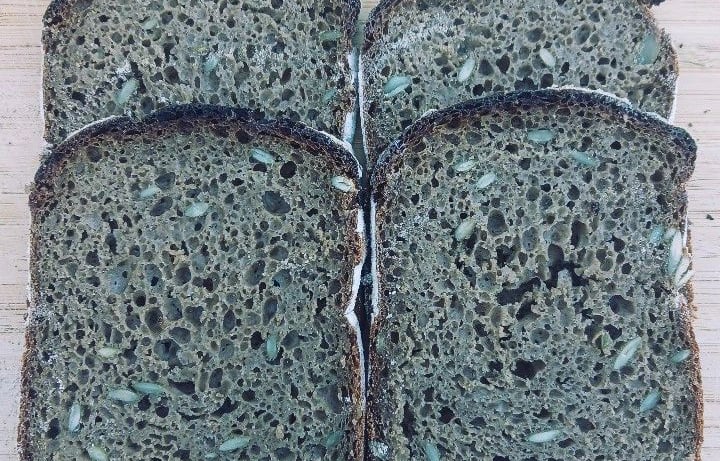
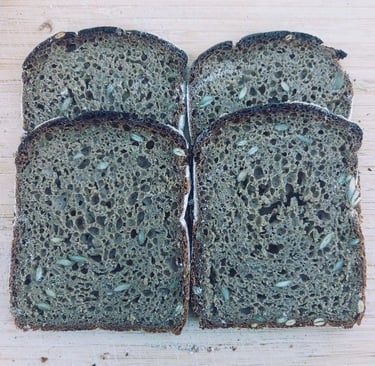
Buckwheat Rye with Pumpkin Seeds and Molasses. 90% Rye.
One of the more interesting concepts of rye sourdough breads is acidification. Acids produced by LAB are incredibly important with rye dough. They steer flavor, deter mold growth, and last but not least inhibit enzymatic activity especially at lower pH levels (a necessity with rye breads to prevent excessive starch hydrolysis during the first part of the bake causing a gummy crumb). This is why sourdough - both its preparation and amount - is the foundation of rye bread baking.
Acidification is defined as the percentage of prefermented rye flour, not total flour. In German bread baking books, one will often find acidification (Versaeuerung) tables to help guide the baker. They look something like the table below:
wheat%/rye%/acidification%
90/10/100
80/20/100
70/30/85
60/40/65
50/50/50
40/60/50
30/70/50
20/80/50
10/90/45
0/100/42
Lets take a look at the fifth line from the bottom. This is a 40/60 dough. So if total flour in recipe is 20kg, then (40%) 8kg wheat + (60%) 12kg rye. According to the table 50% of the rye should be acidified and be used for sourdough.
Therefore 8kg of wheat flour, the remaining 6kg rye flour and a whopping 12kg of sourdough (at 100% hydration, 6kg rye + 6kg water) would go into the final dough!
In our example, sourdough as a percentage of final dough flour equals 86%. This is vastly different from wheat based Tartine style loaves that generally range between 15-25%.