BREADQUELLE.COM
Rye Basics
RYE
Stephen Kramer
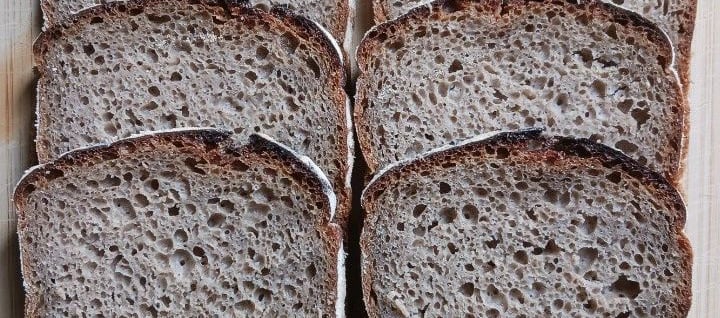
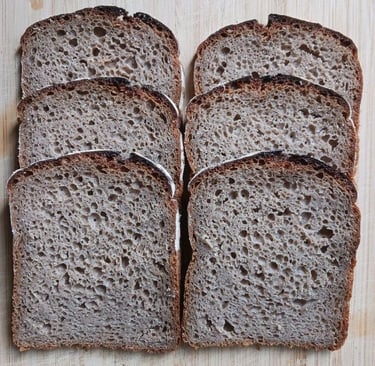
For me, rye bread is a parallel universe where the overarching bread baking steps - mix, bulk fermentation, formation, proof, and bake - still exist, but the rules for each of these steps is completely different from wheat based breads. What a wonderfully enriching space to explore.
Mix. There is little gluten to develop. What little gluten exists, is in fact is formed by gliadin and glutelin proteins, the latter a significantly weaker cousin to glutenin. More important is the bonding of water to starch, so a slow and long mix works best.
Bulk. Carbon dioxide gases are trapped in a gum secreted by pentosans, a polysaccharide. The gum-gas structure is very delicate, therefore bulk fermentation is kept short, so that most of the gases are developed after formation.
Formation. The dough consistency is like wet cement. It is either moulded carefully by hand, or even simply scooped into a form.
Proof. This is where most of the post mixing fermentation takes place. Generally longer and warmer. Cracks, pinholes, and volumetric rise are a baker's best friend.
Bake. Freestyle loaves are baked at a higher starting temperature to help increase internal temperature quickly to the amylase enzyme kill point. Otherwise a longer period of accelerated enzymatic action of converting starches to sugars results in a gummy crumb.