BREADQUELLE.COM
Zavarka
RYE
Stephen Kramer
Zavarka...the secret element of Baltic custard breads. For those of you unfamiliar with custard breads, they are characterized by their sweet and sour flavor profile, dark soul-searching leathery crusts, and rich cake like crumb. Think Dostojevski composing Brothers Karamazov by the fireplace in his countryside cabin on a wintry day snacking on a thin slice of Baltic Rye slathered with butter:-)
Custard breads follow a four-part process - 1) ZAKVASKA is a sour stiff rye sponge , 2) ZAVARKA is a sweet custard, 3) OPARA melds together the sour sponge and the sweet custard, and 4) TECTO is the final dough.
The zavarka is composed of three elements - rye flour, malt, and an aromatic. Malt can vary by bread; typical is either a dark non-enzymatic red rye malt (solod) or a light-colored enzymatic rye or barley malt. Aromatics also vary by bread; typical is either coriander or caraway.
Boiling water is poured over the dry ingredients causing the starches in the flour to gelatinize and the aromatics to release their essential oils. If the bread calls for non-enzymatic malt, it is included before the boiling water is added. If the bread calls for enzymatic malt, it is added after the boiling water is added and the temperature has dropped in order to preserve its enzymatic activity.
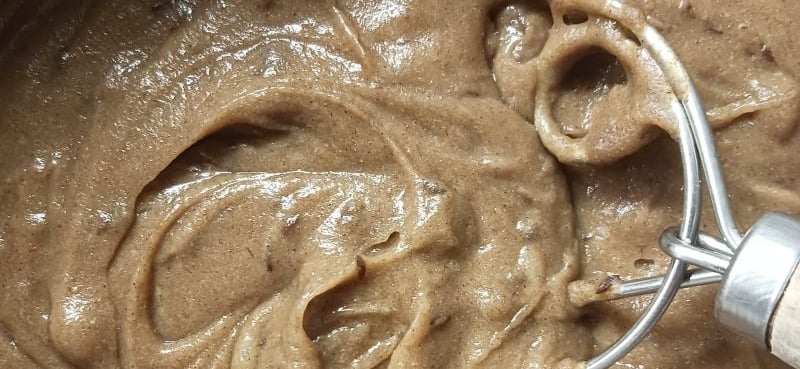
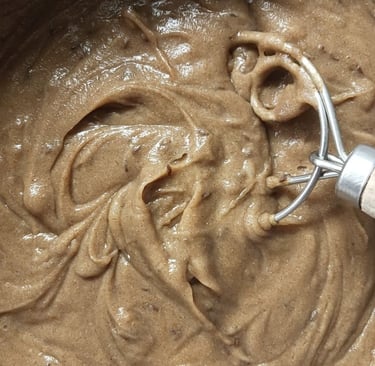
Most importantly, the zavarka is a "thermophilic" scald, meaning the mixture is kept within a temperature range of 63-67c for many hours to accelerate saccharification, the conversion of starches into sugars. During this period, the gelatinous mass transforms into a magically sweet and aromatic concoction with the consistency of apple sauce. In the old days, the zavarka step was performed in wooden barrels, which provided the right insulation needed to maintain the higher thermophilic temperature over an extended period of time.
Photo: zavarka after 8 hours of thermophilic saccharification, contains enzymatic malt and caraway as the aromatic, to be used in Riga Rye